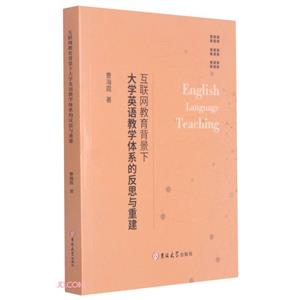

作者:车向前著
页数:109页
出版社:中国纺织出版社
出版日期:2021
ISBN:9787518085750
电子书格式:pdf/epub/txt
内容简介
本书分为六章。第一章回顾了相关理论文献,第二章介绍了哈贝马斯的认知旨趣理论;文章的核心部分是第三至第五章,即运用哈贝马斯的认知旨趣理论对目前的大学英语教育进行了以下三个方面的反思:大学英语教育本质、大学英语教育目标、大学英语教育的师生关系。作为本书重要的组成部分,最后一章讨论了这些思想在微观教育理论研究领域如课程设计、教学模式(特别是基于网络论坛的辅助大学英语写作教学模式),教材选择等方面的应用。
目录
Chapter 1 Related Concepts and Literature Review
1.1 Two Theoretical Study Levels and Some Key Concepts
1.2 Literature Review of Theoretical CEE Studies in China
1.3 Limitations of These Studies
Chapter 2 Habermas’ Knowledge-Constitutive Interest Theory and Its Related Studies
2.1 Habermas’Knowledge-Constitutive Interest Theory
2.2 Studies on KCIT and Its Applications in Education at Home and Abroad
2.3 Why Is KCIT Proposed as Foundation?
Chapter 3 Viewing the Nature of CEE Based on KCIT
3.1 A Historical Look of CEE and Its Limitations
3.2 The Nature of CEE Based on KCIT: Language-Based but Human-Centered
3.3 The Nature of CEE Based on Trichotomous KCIT: An Inte-grated Course
Chapter 4 Viewing Educational Objective of College English Curriculum Based on KCIT
4.1 The Current Curriculum Objective
4.2 Instrumental Objective
4.3 Cross-cultural and Social Communicative Objective
4.4 Emancipatory or Critical Reflective Objective
Chapter 5 Relationship between Teachers and Students in CEE: from Binary Opposition to Dialogue and Intersubjectivity
5.1 Subjectivity Philosophy and T-S Binary Opposition in CEE
5.2 Intersubjectivity Philosophy and Habermas’ Dialogical Reason
5.3 Language Education, Intersubjective T-S Relationship in CEE under Habermas’ Dialogical Reason
Chapter 6 Revelation for Pedagogical Practice of CEE Based on KCIT
6.1 Course Design
6.2 Learning Model
6.3 Instructional Design: An Example
6.4 Teaching Material Selection
Conclusions and Implications
Bibliography
1.1 Two Theoretical Study Levels and Some Key Concepts
1.2 Literature Review of Theoretical CEE Studies in China
1.3 Limitations of These Studies
Chapter 2 Habermas’ Knowledge-Constitutive Interest Theory and Its Related Studies
2.1 Habermas’Knowledge-Constitutive Interest Theory
2.2 Studies on KCIT and Its Applications in Education at Home and Abroad
2.3 Why Is KCIT Proposed as Foundation?
Chapter 3 Viewing the Nature of CEE Based on KCIT
3.1 A Historical Look of CEE and Its Limitations
3.2 The Nature of CEE Based on KCIT: Language-Based but Human-Centered
3.3 The Nature of CEE Based on Trichotomous KCIT: An Inte-grated Course
Chapter 4 Viewing Educational Objective of College English Curriculum Based on KCIT
4.1 The Current Curriculum Objective
4.2 Instrumental Objective
4.3 Cross-cultural and Social Communicative Objective
4.4 Emancipatory or Critical Reflective Objective
Chapter 5 Relationship between Teachers and Students in CEE: from Binary Opposition to Dialogue and Intersubjectivity
5.1 Subjectivity Philosophy and T-S Binary Opposition in CEE
5.2 Intersubjectivity Philosophy and Habermas’ Dialogical Reason
5.3 Language Education, Intersubjective T-S Relationship in CEE under Habermas’ Dialogical Reason
Chapter 6 Revelation for Pedagogical Practice of CEE Based on KCIT
6.1 Course Design
6.2 Learning Model
6.3 Instructional Design: An Example
6.4 Teaching Material Selection
Conclusions and Implications
Bibliography