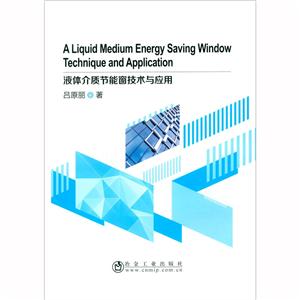
作者:吕原丽著
页数:146页
出版社:冶金工业出版社
出版日期:2020
ISBN:9787502468880
电子书格式:pdf/epub/txt
内容简介
本书的主要内容为一种新型的围护结构节能技术, 液流窗的介绍及其热性能研究成果。具体包括7个章节内容。分别涉及研究背景及节能窗体技术的发展 ; 该节能液流窗的热性能实验研究 ; 针对其结构和设计参数开展的优化研究 ; 考虑民用和公共建筑等不同用户特性而开展的应用优化研究。
作者简介
吕原丽,西华大学副教授。近三年成果A.承担和参与项目:主持项目(1)真空水流窗的热特性及其节能研究,国家自然科学基金青年基金,2019-2021,在研(2)基于建筑动态负荷特性的真空水流窗应用节能优化研究,2019年四川省留学人员科技活动项目,2020-2022,在研(3)高级液流窗强化热利用及其优化,内蒙古自治区教育厅高校项目,2017-2019,在研参与项目(1)基于新型直接接触式储热的熔融PCM射流破碎机理研究,国家自然科学基金青年基金,2018-2020,在研B.所获荣誉西华大学青年学者C.发表论文:[1]Y.L.Lyu,W.J.Liu,H.Su,X.Wu.(2019)Numericalanalysisontheadvantagesofevacuatedgapinsulationofvacuum-waterflowwindowinbuildingenergysavingundervariousclimates.Energy,175,353-364.(SCI,1区)[2]Y.L.Lyu,X.Wu,C.Y.Li,H.Su,L.J.He.(2019)Numericalanalysisontheeffectivenessofwarmwatersupplyinwaterflowwindowforroomheating.Solarenergy,177,347-354.(SCI,2区)[3]Y.L.Lyu,W.J.Liu,T.T.Chow,H.Su,X.J.Qi.(2019)Pipe-workoptimizationofwaterflowwindow.Renewableenergy,139,136-146.(SCI,2区)[4]Y.L.Lyu,T.T.Chow最,J.L.Wang.(2018)Numericalpredictionofthermalperformanceofliquid-flowwindowindifferentclimateswithanti-freeze.Energy,157,412-423.(SCI,1区)[5].T.T.Chow,Y.L.Lyu最(2017)Effectofdesignconfigurationsonwaterflowwindowperformance.Solarenergy,155,354-362.(SCI,2区)[6]T.T.Chow,Y.L.Lyu最.(2017)NumericalanalysisontheadvantageofusingPCMheatexchangerinliquid-flowwindow.Appliedthermalengineering,125,1218-1227.(SCI,2区)[7]Y.L.Lyu最,C.Liu,H.Su.(2019)Thermalperformancepredictionofwatermediumwindow:acasestudyinhotsummercoldwinterclimate.ABS2019,Bern,Switzerland,28-29O
目录
1.1 Single Glazing
1.2 Double Glazing System
1.3 Multi glazing System
1.4 Liquid Flow Window
2 Experimental Investigation of Thermal Performance of Double Glazing Liquid Flow Window
2.1 Research Method
2.1.1 Experiment Set Up
2.1.2 Measuring Instrument
2.2 Experiments and Results Analysis
2.2.1 Water Flow Window Performance
2.2.2 Anti-freezing Liquid Flow Window Performance
2.2.3 Performance Comparison of Water and Anti-freezing Liquid Flow Window
2.3 Summary
3 Schematic Optimization of Liquid Flow Window
3.1 Research Methodology
3.1.1 Mathematical Models Development
3.1.2 Model Validation
3.2 Performance Evaluation with the Variation of Schematic Parameters
3.2.1 Thermal Performance at Different Cavity Spaces
3.2.2 Thermal Performance Comparison with Various Pipe-work Designs
3.2.3 Thermal Performance Evaluation with Variation of Window Dimension
3.3 Summary
……
4 Performance Evaluation with PCM Thermal Storage: for Residential and Office Buildings Hot Water Demand Patterns
5 Liquid Flow Window Performance under Different Climate Applications
6 Life Cycle Assessment of Liquid Flow Window
7 Summary and Major Conclusions
References