
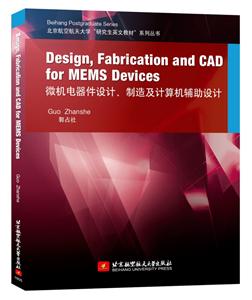
作者:郭占社[著]
页数:272
出版社:北京航空航天大学出版社
出版日期:2016
ISBN:9787512421097
电子书格式:PDF
PDF下载地址

内容简介
Thisbookfirstlyintroducesthepertinentfundamentaltheory,importantmaterialandfabricationprocessofmicroGelectromechanicalsystems.Basedonthesetheories,thedesignruleandimportantengineeringexamplesaredescribedindetail.Then,manyengineeringapplicationsforMEMSincludingtheaccelerationmeasurement,theangularspeedmeasurementandthepressuremeasurementareintroduced.Finally,finiteelementmethodisintroducedinordertoprovethecorrectnessofthedesign.Thisengineeringapplicationofsimulationincludesthestaticandmodalanalysisofthebeam,capacitanceanalysis,thermalGstructureanalysisofthedeviceandfatigueanalysisetc.Itcanbeselectedasthereferencetothepostgraduates,undergraduatesandpertinentengineeringstaffwhoseresearch directionsareinstrumentationscienceandtechnology,controlscienceandengineering,mechanicalengineeringetc.
目录
1.1 ConceptofMEMS ……………………………………………………………………… 1
1.2 DevelopmentofMEMS ………………………………………………………………… 4
1.3 MEMSCAD …………………………………………………………………………… 9
Chapter2 BasictheoryofMEMS …………………………………………………………… 12
2.1 TheoryofelectrostaticMEMScombactuators …………………………………… 12
2.1.1 Introduction ……………………………………………………………………… 12
2.1.2 Operatingprinciples …………………………………………………………… 13
2.1.3 Platecapacitortheoryinidealcondition ……………………………………… 14
2.1.4 ThemodifiedmodelofMEMSplatecapaciator ……………………………… 17
2.1.5 Calculationofelectrostaticcombdrivingforceinidealsituation …………… 24
2.1.6 Weakcapacitancedetectionmethodofelectrostaticcombdrive …………… 26
2.2 RelevanttheoreticalcalculationsfortheMEMScantileverbeam ………………… 34
2.2.1 Introduction ……………………………………………………………………… 34
2.2.2 Theoreticalcalculationmethodforcantileverbeam ………………………… 35
2.2.3 RelevanttheoreticalcalculationofaxialtensileandcompressiveonsingleGend
clampedbeams ………………………………………………………………… 36
2.2.4 RelatedtheoreticalcalculationsofdoubleGendclampedbeamsaxialtension
andcompression ………………………………………………………………… 40
2.3 MembranetheoryofMEMS ………………………………………………………… 47
2.3.1 Theoryofclampedaroundcirculardiaphragm ………………………………… 48
2.3.2 Theoryofclampedaroundrectangularflatdiaphragm ……………………… 49
References …………………………………………………………………………………… 52
Chapter3 MEMSmaterials …………………………………………………………………… 53
3.1 Monocrystallinesilicon ……………………………………………………………… 53
3.1.1 Introduction ……………………………………………………………………… 53
3.1.2 Crystalorientationofmonocrystallinesilicon ………………………………… 55
3.2 Polycrystallinesilicon ………………………………………………………………… 64
3.3 Silica …………………………………………………………………………………… 66
3.4 Piezoelectricmaterials ………………………………………………………………… 67
3.4.1 Piezoelectriceffectandinversepiezoelectriceffectofmaterials …………… 67
3.4.2 Quartzcrystal …………………………………………………………………… 68
3.4.3 Piezoelectricceramics …………………………………………………………… 73
3.5 OtherMEMSmaterials ……………………………………………………………… 75
3.6 Summary ……………………………………………………………………………… 76
Chapter4 MEMStechnology ………………………………………………………………… 77
4.1 MEMSlithographyprocess ………………………………………………………… 78
4.2 KeytechnologyofMEMSlithographyprocess …………………………………… 80
4.2.1 Wafercleaning …………………………………………………………………… 80
4.2.2 Siliconoxidation ………………………………………………………………… 80
4.2.3 Spincoatingprocess …………………………………………………………… 87
4.2.4 Prebaking ………………………………………………………………………… 90
4.2.5 Exposure ………………………………………………………………………… 92
4.2.6 Development ……………………………………………………………………… 94
4.2.7 Hardening ………………………………………………………………………… 96
4.2.8 FabricationoftheSiO2 window ………………………………………………… 97
4.3 SubsequentprocessofMEMS ……………………………………………………… 98
4.3.1 Bulksilicontechnology ………………………………………………………… 98
4.3.2 Surfacesiliconprocess ………………………………………………………… 103
4.3.3 LIGAtechnology ……………………………………………………………… 104
4.3.4 Sputteringtechnology ………………………………………………………… 105
4.3.5 LiftGoffprocess ………………………………………………………………… 107
4.4 Filmpreparationtechnology………………………………………………………… 107
4.5 Bondingprocess ……………………………………………………………………… 108
4.5.1 Anodicbondingprocess………………………………………………………… 109
4.5.2 SiliconGsilicondirectbonding ………………………………………………… 110
4.5.3 Metaleutecticbonding ………………………………………………………… 113
4.5.4 Coldpressureweldingbonding ……………………………………………… 114
4.6 Engineeringexamplesofcombinationformultipleprocessestofabricatethe
MEMSdevice ………………………………………………………………………… 115
4.6.1 Introduction …………………………………………………………………… 115
4.6.2 EngineeringexampleoffabricationprocessforresonantMEMSgyroscope
…………………………………………………………………………………… 115
4.6.3 EngineeringexampleofelectromagneticmicroGmotorproductionprocess
…………………………………………………………………………………… 118
4.7 Summary ……………………………………………………………………………… 124
References…………………………………………………………………………………… 125
Chapter5 Frictionwearandtearundermicroscale ……………………………………… 126
5.1 OffGchiptestingmethodformicrofriction ………………………………………… 127
5.1.1 MicroGtribologytestwiththepinGonGdiscmeasuringmethod ……………… 127
5.1.2 MicroGtribologytestwithAFM ……………………………………………… 128
5.1.3 MicroGtribologytestwithspecialmeasuringdevice ………………………… 130
5.2 OnGchiptestingmethodformicrofriction ………………………………………… 132
5.2.1 OnGchiptestingmethodactuatedbyelectrostaticforce …………………… 132
5.2.2 OnGchipmicroGfrictiontestingmethodusingthemechanismcharactersof
thebimorphmaterial…………………………………………………………… 139
5.3 ExampleofthedesignforanonGchipmicroGfrictionstructure ………………… 141
5.3.1 Structureandworkingprinciple ……………………………………………… 141
5.3.2 Calculationofpertinenttheory ……………………………………………… 142
5.3.3 Technologicalanalysisofstructuraldesign ………………………………… 148
5.3.4 Testingresultsanddataanalysis……………………………………………… 152
5.3.5 ResearchandtestofwearproblemofMEMSdevices ……………………… 161
5.4 Summary ……………………………………………………………………………… 165
References…………………………………………………………………………………… 165
Chapter6 MEMStestingtechnologyandengineeringapplication ………………………… 169
6.1 Accelerationmeasurementandcorrespondingsensors …………………………… 169
6.1.1 Workingprincipleoftheaccelerationsensorandtheclassification ……… 170
6.1.2 Capacitivesiliconmicromechanicalaccelerometer …………………………… 172
6.1.3 Piezoresistivesiliconmicromechanicalaccelerometer ……………………… 173
6.1.4 Piezoelectricmicromechanicalaccelerometer ………………………………… 174
6.1.5 ResonantsiliconMEMSaccelerometer ……………………………………… 175
6.2 Angularspeedmeasurementandcorrespondingsensors ………………………… 177
6.2.1 Workingprinciple ……………………………………………………………… 177
6.2.2 DevelopmentofMEMSgyroscope …………………………………………… 178
6.2.3 Classificationofmicromechanicalgyroscope ………………………………… 188
6.3 Pressuremeasurementandcorrespondingsensors ……………………………… 190
6.3.1 Workingpincinple ……………………………………………………………… 190
6.3.2 Resonantsiliconmicromechanicalpressuresensoranditsdevelopment … 193
6.4 MeasurementofmicroGtorque ……………………………………………………… 198
6.4.1 Introduction …………………………………………………………………… 198
6.4.2 Workingprincipleofnoncontactmethod …………………………………… 199
6.4.3 Theoreticalcalculation ………………………………………………………… 200
6.4.4 Correspondingequipmenttorealizethenoncontactmethod ……………… 205
6.4.5 Experimentresultanddiscussion …………………………………………… 209
6.5 Microscopicmorphologytestingmethod ………………………………………… 211
6.6 Summary ……………………………………………………………………………… 212
References…………………………………………………………………………………… 212
Chapter7 Applicationexamplesofthefiniteelementmethodinthedesignof
MEMSdevices …………………………………………………………………… 218
7.1 Importantconceptsofthesoftware………………………………………………… 218
7.2 IntroductionoftheAnsyssoftwareinterface……………………………………… 220
7.3 ThecoordinatesysteminAnsys …………………………………………………… 221
7.4 Engineeringexamples ……………………………………………………………… 226
7.4.1 StaticanalysisofsingleGclampedbeam ……………………………………… 226
7.4.2 ModalanalysisofdoubleGclampedbeam ……………………………………… 245
7.4.3 CapacitanceanalysisofMEMSelectrostaticcombfingersdrive …………… 257
7.4.4 Fatiguestrengthcalculationexample ………………………………………… 264
7.5 Summary ……………………………………………………………………………… 272